August is National Wellness Month, a reminder that taking care of your health goes beyond eating well and staying active. One of the most overlooked parts of wellness is your skin, the largest organ in your body.
Many of us notice new brown spots appearing over time, especially after years of sun exposure. While many of these are simply age spots, some changes in the skin can be an early sign of skin cancer. Knowing the difference could make all the difference.
What Are Age Spots?
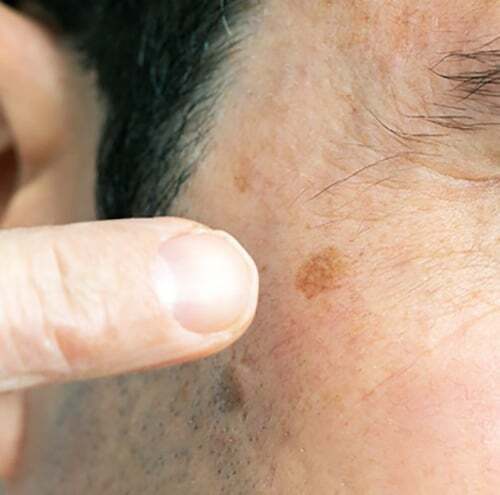
Age spots, also called solar lentigines or sun spots, are flat areas of increased pigmentation that develop after years of ultraviolet (UV) exposure. Despite the name, they aren't caused by aging itself - they're caused by cumulative sun damage.
Age spots commonly appear on areas that receive the most sun, including:
- Face
- Hands
- Chest
- Shoulders
- Forearms
They are typically:
- Flat and smooth
- Tan, brown, or dark brown
- Uniform in colour
- Round or oval
- Stable over time
While they are completely harmless, many people choose to treat them for cosmetic reasons.
What Does Skin Cancer Look Like?
Not every suspicious spot is dark or raised. Skin cancer can appear in many different ways, which is why regular skin checks are so important.
Warning signs include:
- A spot that changes in size, shape, or colour
- Irregular or uneven borders
- Multiple colours within one lesion
- A sore that doesn't heal
- Bleeding, crusting, or itching
- A mole that looks different from all the others
A helpful guide is the ABCDE Rule:
A – Asymmetry: One half doesn't match the other.
B – Border: Edges are irregular, blurred, or uneven.
C – Colour: Multiple shades of brown, black, red, white, or blue.
D – Diameter: Larger than approximately 6 mm (about the size of a pencil eraser), although melanomas can be smaller.
E – Evolving: Any change over time.
If you notice any of these signs, it's important to have the lesion assessed by your healthcare provider or dermatologist before considering any cosmetic treatment.
Can Age Spots Be Removed?
Yes—but only after you've confirmed they are benign.
Once a spot has been assessed and determined to be harmless, there are several effective treatment options to reduce pigmentation.
Depending on the type of pigmentation, treatment may include:
- Medical-grade skincare
- Chemical peels
- SkinPen® microneedling (for selected pigmentation concerns)
- IPL photorejuvenation for sun damage and age spots
At PUR med spa, every pigmentation consultation begins with an assessment to determine whether a spot appears appropriate for cosmetic treatment. If there is ever any uncertainty, we will recommend medical evaluation before proceeding. Your safety always comes first.
Prevention Is Always Easier Than Treatment
Most age spots are preventable.
Daily sun protection is one of the most effective things you can do for both the appearance and health of your skin.
Protect your skin by:
- Wearing a broad-spectrum SPF 30 or higher every day
- Reapplying sunscreen every two hours when outdoors
- Wearing hats and protective clothing
- Seeking shade during peak UV hours
- Avoiding tanning beds
Even on cloudy days, UV rays continue to damage the skin.
National Wellness Month Is a Great Time to Check Your Skin
Just as you schedule dental cleanings or annual physicals, it's worth taking a few minutes each month to become familiar with your skin.
If you notice a new spot -or an existing one begins to change - don't ignore it.
Early detection is one of the most important factors in successfully treating skin cancer.
At the same time, if you've accumulated years of sun damage and would like to improve the appearance of age spots or uneven pigmentation after medical clearance, there are safe and effective options available.
Healthy skin isn't just about looking your best—it's about protecting your health for years to come.